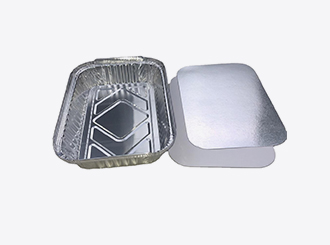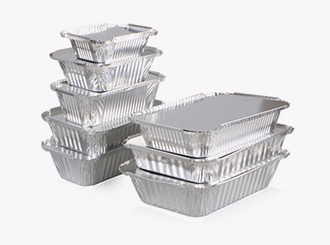
Many importers focus heavily on price when sourcing aluminum foil containers, but small specification problems can quickly turn into expensive losses. In recent years, more buyers have faced issues such as container deformation during baking, damaged products after shipping, lid leakage, and inconsistent foil thickness. In most cases, these problems are not discovered until the goods arrive at the destination market.
One food packaging distributor in the Middle East once reported that an entire batch of aluminum foil trays collapsed during high-temperature oven use. After inspection, the actual foil thickness was lower than the agreed specification. Another importer experienced serious carton damage because the containers were packed without proper reinforcement during loading. These situations not only increase replacement costs, but can also damage customer trust and delay future orders.
As an aluminum foil container manufacturer with export experience in multiple international markets, Eming have seen that many common sourcing problems can be avoided before production even begins. Understanding material thickness, alloy quality, packaging methods, heat resistance, and lid compatibility is far more important than simply comparing prices between suppliers.
In this article, Eming will discuss several real problems importers often face when purchasing aluminum foil containers and explain how to reduce quality risks, shipping damage, and unnecessary costs during international sourcing.
One of the most common quality problems in aluminum foil containers is deformation during oven use. Many low-cost products use thinner aluminum material to reduce production costs. Although thinner foil containers may appear acceptable during visual inspection, they can easily bend, collapse, or leak when exposed to high temperatures.
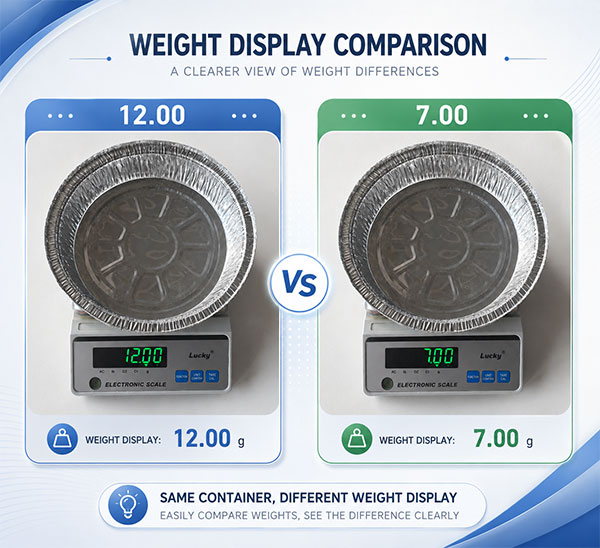
For example, for 9 Inch Aluminum Foil Pans of the same size, the thicker one will definitely have a higher gram weight 12g, while the thinner one will have a lower gram weight, only 7g.
Aluminum foil container importers should always confirm the actual foil thickness before mass production. Different applications require different material strengths. For example, airline meal trays, takeaway containers, and BBQ trays all require different thickness standards depending on weight capacity and heating conditions.
| Container Application | Recommended Thickness | Common Problem |
|---|---|---|
| Takeaway Containers | 0.042mm – 0.070mm | Deformation during transport |
| BBQ Trays | 0.081mm – 0.161mm | Collapse under high heat |
| Airline Food Trays | 0.083mm – 0.090mm | Poor rigidity |
Packaging quality is another important factor that many importers overlook. Even high-quality aluminum foil containers can become damaged if the carton strength is insufficient or if the products are improperly stacked during loading.
Long-distance sea transportation places heavy pressure on outer cartons. Weak cartons may collapse during stacking, especially in humid environments or during rough handling at ports. Some suppliers also reduce packaging costs by using thinner cartons or insufficient internal support.
Before placing an order, buyers should confirm carton thickness, pallet requirements, loading methods, and shrink wrapping details. Proper packaging can significantly reduce shipping damage and customer complaints.
Another common issue involves lid compatibility. Even small dimensional differences between containers and lids can create sealing problems. In food delivery and takeaway applications, poor lid fitting may lead to liquid leakage, product contamination, or customer dissatisfaction.
Importers should always test lid matching before mass production, especially when sourcing containers and lids from different factories. Sample testing under real usage conditions is highly recommended.
For applications requiring secure lid fitting, our 7 Inch Aluminum Pan can be supplied with both foil laminated lids and clear plastic lids to meet different food packaging requirements.
Not all aluminum foil materials offer the same performance. Some low-cost suppliers use recycled aluminum with unstable quality, which may affect heat resistance, flexibility, and food safety performance.
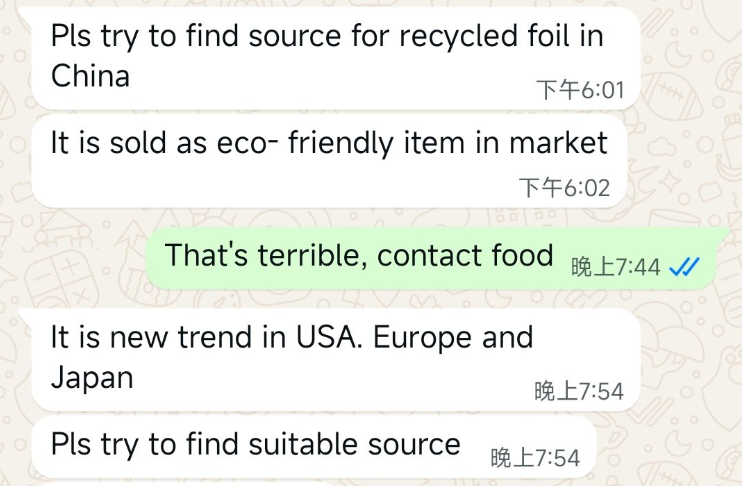
Low-quality alloy materials may produce unusual odors during heating or become brittle after forming. In some cases, containers may crack at folded corners or edges during transportation.
Buyers should confirm whether the supplier uses food-grade aluminum alloy materials and whether the products comply with local food packaging standards.
Production tolerance is another critical factor in aluminum foil container manufacturing. Thickness variation, weight inconsistency, and dimensional deviation can directly affect product performance and packaging efficiency.
Some factories reduce production costs by lowering actual foil thickness below the agreed specification. Although the difference may not be visible to the naked eye, it can significantly reduce product strength.
Professional suppliers usually perform thickness inspection, weight control, and dimensional testing during production to maintain consistency.
Choosing a supplier based only on price often creates larger costs later. Experienced importers usually evaluate suppliers based on production capability, export experience, quality control systems, and packaging standards.
Before confirming bulk orders, buyers should request production photos, packing details, thickness specifications, loading plans, and sample testing reports. Stable lead times and clear communication are also important indicators of a reliable supplier.
Professional buyers typically review several important details before finalizing an aluminum foil container order:
Careful inspection before production can help reduce quality risks, avoid shipping damage, and improve customer satisfaction in the destination market.
Many costly sourcing problems can be avoided through better communication, material verification, packaging inspection, and sample testing before production starts. For importers, focusing only on the lowest price often creates higher long-term costs.
Working with an experienced aluminum foil container manufacturer that understands export requirements, packaging standards, and production consistency can help reduce risks and improve supply chain stability.
For example, when sourcing round foil pans for baking, takeaway meals, or pie packaging, buyers should carefully evaluate foil thickness, lid compatibility, and carton strength before placing bulk orders.
If you are looking for a reliable solution, our 7 Inch Aluminum Pan is manufactured with 65-micron food-grade aluminum foil and is available with both foil laminated lids and clear plastic lids, making it suitable for baking, food delivery, and retail packaging applications.
Want to learn more details, pls contact me by WhatsApp +86 19913889786 or marketing@emingfoil.com.