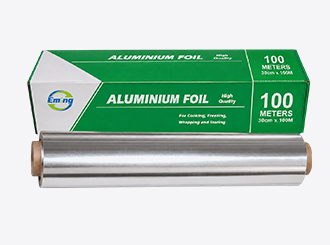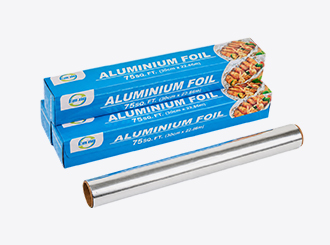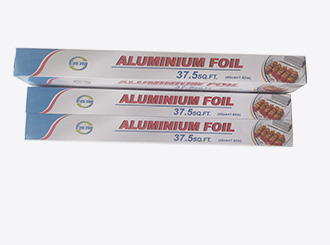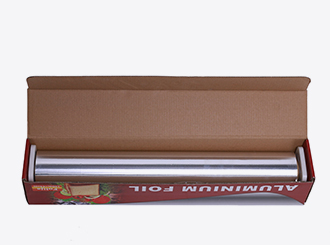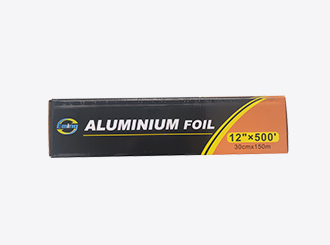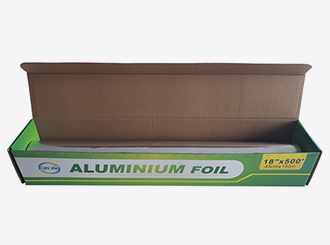
Choosing the right catering aluminium foil suppliers can directly affect your product quality, landed cost, delivery reliability and distributor margins. This 2026 sourcing guide explains how importers, wholesalers and distributors can evaluate aluminium foil suppliers before placing bulk orders.
1. What Should Importers Look for in Catering Aluminium Foil Suppliers?
The best catering aluminium foil supplier is not necessarily the supplier offering the lowest quotation. Instead, you should evaluate the total value that the supplier provides, including product quality, production capacity, packaging, delivery and export experience.
For importers and distributors, the key factors include:
- Aluminium foil quality and consistency
- Available widths and lengths
- Foil thickness and tolerance
- Raw material and alloy
- Production capacity
- MOQ
- Packaging options
- Container loading efficiency
- Delivery lead time
- OEM and private-label capability
- Export experience
- Quality inspection procedures
Moreover, you should compare the total landed cost, rather than simply comparing the lowest FOB price. A supplier with a lower unit price may create a higher final cost if the packaging is inefficient or the container loading is poor.
2. Manufacturer or Trading Company: Which Supplier Should You Choose?
Before comparing quotations, determine whether you are buying directly from an aluminium foil manufacturer or from a trading company.
A direct manufacturer normally gives you better visibility into production capacity, raw materials, machine capability, quality control, packaging and production schedules.
Meanwhile, a trading company may provide access to several factories and multiple product categories. This can be useful if you want to consolidate different packaging products into one purchase.
However, if you regularly purchase catering aluminium foil in pallet or full-container quantities, a direct manufacturer can provide greater control over specifications, production schedules and customization.
Questions to Ask a Potential Supplier
- Are you a manufacturer or trading company?
- Where is your production facility?
- What aluminium foil products do you manufacture?
- What is your monthly production capacity?
- Which export markets do you currently serve?
- Can you provide product specifications and samples?
- Can you support OEM or private-label packaging?
- What is your standard MOQ?
3. Check Aluminium Foil Material and Alloy Specifications
Material selection affects catering aluminium foil performance. For household and catering applications, 8011-O aluminium foil is widely used because it offers a practical combination of flexibility, strength and processing performance.
However, you should not evaluate a supplier only by alloy. Request the complete technical specification before comparing quotations.
| Specification | Example |
|---|---|
| Alloy | 8011 |
| Temper | O |
| Thickness | 9 - 25 μm |
| Width | 29 / 30 / 44 / 45 / 60 cm |
| Length | 3–300 m or customized |
| Core | ⌀30mm, ⌀38mm |
| Packaging | Color box / neutral packaging |
| Application | Catering / foodservice |
4. Evaluate Foil Thickness and Performance
Thickness directly affects product performance and purchasing cost. Thinner foil can reduce material consumption and shipping weight, while thicker foil can provide greater strength and resistance to tearing.
Therefore, when comparing catering aluminium foil suppliers, request:
- Nominal thickness
- Thickness tolerance
- Width tolerance
- Roll length tolerance
- Tensile strength
- Elongation
- Surface quality
- Pinholes
- Cleanliness and odor requirements
This approach prevents you from comparing different products under the same price label. A lower quotation may simply represent a different specification.
5. Compare Standard Catering Aluminium Foil Sizes
Importers should select roll sizes according to their target market instead of requesting a generic quotation for “catering foil.”
Common catering foil widths include:
- 29 cm
- 30 cm
- 44 cm
- 45 cm
- 60 cm
30 cm Catering Aluminium Foil
30 cm foil is suitable for restaurants, takeaway businesses, catering companies and general foodservice applications.
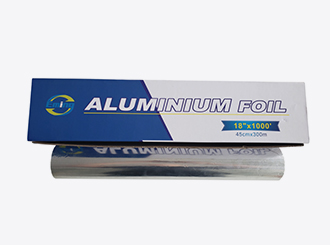
45 cm Catering Aluminium Foil
45 cm foil provides greater coverage and can suit commercial kitchens, catering operations and foodservice distributors.
60 cm Catering Aluminium Foil
60 cm foil can serve specialized foodservice and commercial applications where wider coverage is required.
Therefore, your RFQ should specify both width and length. For example: 45 cm × 300 m × 15 μm provides a much clearer purchasing specification than simply asking for catering aluminium foil.
6. Check MOQ Before Comparing Prices
MOQ varies according to roll size, thickness, packaging, printing requirements and production batch.
A supplier may accept a smaller trial order for standard packaging but require a larger MOQ for customized packaging.
| Order Quantity | Typical Purpose |
|---|---|
| 1 pallet | Trial order |
| 1 × 20GP | Initial commercial order |
| 1 × 40GP | Regular distribution |
| Multiple containers | Volume purchasing |
Ask suppliers to quote at several quantities. This lets you see how unit pricing changes with order volume.
7. Packaging Is Critical for Distributors
Packaging protects the foil and also affects your product presentation. For distributors, packaging can also support brand development.
Common packaging formats include:
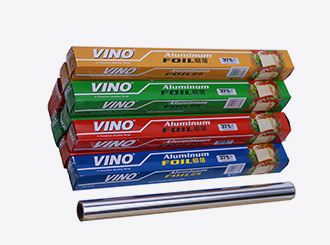
- Printed color boxes
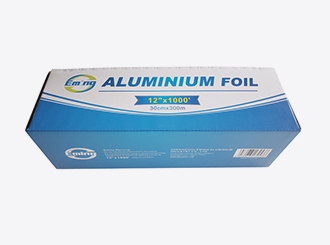
- Neutral boxes
- Individual rolls
- Shrink-wrapped rolls
- Private-label packaging
- Retail-ready cartons
Ask suppliers whether they can provide custom logos, color boxes, barcodes, carton markings, multilingual packaging and customized roll labels.
In addition, confirm the packaging MOQ before approving your order. Custom printing normally requires a larger production quantity than standard packaging.
8. Evaluate Container Loading Efficiency
Container loading can significantly affect your final import cost. Aluminium foil is relatively heavy, so the cargo may reach the practical container weight limit before using all available volume.
Request a detailed loading plan showing:
- Cartons per 20GP
- Cartons per 40GP
- Cartons per 40HQ
- Total gross weight
- Total net weight
- Carton dimensions
- Pallet quantity, if applicable
| Container | Information to Request |
|---|---|
| 20GP | Cartons + gross weight |
| 40GP | Cartons + gross weight |
| 40HQ | Cartons + gross weight |
Therefore, do not assume that a larger container always provides a better purchasing solution. For heavy foil specifications, weight optimization can matter as much as cubic capacity.
9. Verify Food-Grade Quality and Quality Control
Catering aluminium foil is intended for foodservice applications, so importers should establish clear quality requirements before production.
A professional supplier should control:
- Raw material inspection
- Rolling process
- Annealing
- Slitting
- Rewinding
- Length measurement
- Thickness measurement
- Packaging inspection
- Finished-product inspection
You should also confirm which food-contact compliance documents and testing reports the supplier can provide for your destination market.
Most importantly, define these requirements before signing the purchase contract. This reduces the risk of quality disputes after production.
10. Ask About Production Capacity
Production capacity becomes increasingly important as your business grows. A supplier may successfully complete a trial order but struggle when you need several containers every month.
Ask suppliers:
- How many foil production lines do you operate?
- What is your monthly capacity?
- How many shifts do you run?
- What is your normal lead time?
- What is your peak-season lead time?
- Can you reserve production capacity for regular customers?
A supplier with sufficient capacity can provide greater delivery stability, especially for distributors supplying supermarket chains, foodservice wholesalers, restaurant groups or regional distributors.
11. Check OEM and Private-Label Capabilities
OEM packaging can help distributors differentiate their products and develop their own market identity.
Ask whether the supplier can provide:
- Logo printing
- Custom color boxes
- Customized carton printing
- Customized roll length
- Customized foil width
- Customized packaging quantities
- Barcode and SKU management
However, always confirm the MOQ for each customization. A supplier may accept one container for standard packaging but require several containers for fully customized printed packaging.
12. Compare Supplier Pricing Correctly
Price comparison becomes misleading when suppliers quote different specifications. To make a fair comparison, send the same RFQ to every supplier.
A professional RFQ should include:
- Product: Catering Aluminium Foil
- Alloy: 8011-O
- Thickness: 15 μm
- Width: 45 cm
- Length: 300 m
- Packaging: Printed color box
- Rolls/carton: 24
- Quantity: 1 × 20GP
- Destination: Your port
- Trade term: FOB or CIF
Then compare:
- Price per roll
- Price per carton
- Packaging cost
- FOB price
- CIF price
- Printing or tooling cost
- Shipping cost
- Payment terms
This approach gives you a more accurate picture of your total landed cost.
13. Evaluate Payment Terms and Lead Time
Commercial terms affect both your cash flow and inventory planning. Common arrangements include:
- 30% deposit + 70% balance before shipment
- 30% deposit + 70% against copy of Bill of Lading
- Letter of Credit
- Other negotiated terms for established customers
New buyers should confirm payment terms before placing the order. Also ask for the production lead time after receiving the deposit and approving the packaging artwork.
14. Check Export Experience in Your Target Market
A supplier with experience in your target country usually understands local documentation, packaging and shipping requirements more efficiently.
Ask suppliers:
- Which countries do you currently export to?
- Do you regularly ship full containers?
- Can you provide export documentation?
- Do you understand our destination port requirements?
- Have you worked with importers and distributors like us?
If you are researching the Gulf market, see our related guide on aluminium foil suppliers in UAE .
For Malaysia, see our guide to aluminium foil suppliers in Malaysia .
For African sourcing research, compare aluminium foil suppliers in South Africa and aluminium foil manufacturers in South Africa .
15. China as a Major Sourcing Base for Catering Aluminium Foil
China remains an important sourcing market for aluminium foil products because manufacturers can provide large production capacity, multiple specifications, customized packaging and extensive export experience.
However, the goal should not be to find the cheapest Chinese supplier. Instead, importers should identify a manufacturer that can consistently meet their specifications, quality requirements and shipping schedule.
When evaluating Chinese manufacturers, consider:
- Factory location
- Production equipment
- Monthly capacity
- Aluminium foil specifications
- Export markets
- Quality-control procedures
- Packaging capability
- OEM support
- Container loading
- Lead time
If you are specifically researching Chinese suppliers, read our related guide to aluminium foil manufacturers in China .
That regional article works as a cluster page, while this Catering Aluminium Foil Suppliers Selection Guide 2026 serves as the main pillar page for supplier selection.
16. How to Verify a Catering Aluminium Foil Supplier
Step 1: Check the Company
Review the supplier's:
- Company name
- Business registration
- Factory address
- Website
- Export history
- Main products
Step 2: Verify the Factory
Where possible, arrange:
- Factory video inspection
- Third-party factory audit
- Online factory tour
- On-site inspection
Step 3: Test Samples
Do not approve mass production based only on photographs. Request samples and check:
- Thickness
- Width
- Length
- Roll winding
- Surface condition
- Packaging
- Cutter performance
- Actual weight
Step 4: Confirm the Final Specification
Approve a final specification sheet before mass production.
Step 5: Conduct Pre-Shipment Inspection
For larger orders, consider using a third-party inspection company before shipment. This can reduce the risk of receiving products that do not match the approved sample.
17. Red Flags When Choosing Catering Aluminium Foil Suppliers
Be cautious when a supplier:
- Refuses to provide basic company information
- Cannot explain material specifications
- Changes prices without clear reasons
- Offers an unusually low price
- Cannot provide samples
- Avoids factory verification
- Cannot explain production capacity
- Provides unclear carton dimensions
- Cannot provide container loading information
- Promises unrealistic production times
- Requests unusual payment arrangements
- Cannot provide relevant export documentation
A low quotation may look attractive initially. However, inconsistent quality, poor packaging, delayed delivery or inaccurate specifications can create much higher costs later.
18. Recommended Supplier Comparison Checklist
| Evaluation Factor | What to Check |
|---|---|
| Supplier Type | Manufacturer or trading company |
| Alloy | 8011-O or required specification |
| Thickness | Exact thickness and tolerance |
| Width | Required market size |
| Length | Required roll length |
| MOQ | Pallet or container quantity |
| Packaging | Standard or OEM |
| Capacity | Monthly production capability |
| Lead Time | Production and shipping schedule |
| Quality | QC and food-contact requirements |
| Container Loading | Cartons and total weight |
| Export Experience | Target-country experience |
| Payment | Deposit and balance terms |
| OEM | Private-label capability |
| Inspection | Factory and pre-shipment inspection |
| After-Sales | Complaint and replacement process |
Using the same checklist for every supplier makes your purchasing comparison more objective and reduces the risk of selecting a supplier based only on price.
19. Best Sourcing Strategy for Importers and Distributors in 2026
In 2026, importers should focus on building a stable supply chain instead of chasing the lowest short-term quotation.
Stage 1: Shortlist 3–5 Suppliers
Select several suppliers based on product specifications, production capability, export experience, price level and communication.
Stage 2: Test 2–3 Suppliers
Request samples and compare foil quality, packaging, roll length, weight, carton quality and supplier response time.
Stage 3: Develop a Long-Term Supplier
Once you identify a reliable supplier, negotiate improved commercial terms based on your annual purchasing volume.
Potential areas for negotiation include:
- Better FOB pricing
- Reserved production capacity
- Customized packaging
- Improved payment terms
- Mixed-container solutions
- Annual purchasing agreements
This approach can improve supply stability while giving distributors greater purchasing efficiency.
20. Why the Right Catering Aluminium Foil Supplier Matters
Choosing the right catering aluminium foil suppliers affects much more than the initial purchase price.
A reliable supplier can help you maintain:
- Consistent product quality
- Stable supply
- Predictable delivery
- Competitive landed costs
- Consistent packaging
- Better customer satisfaction
- Stronger distributor margins
Moreover, a long-term manufacturing relationship can make it easier to introduce new foil sizes, packaging formats and private-label products.
Therefore, treat supplier selection as a strategic purchasing decision rather than a simple price comparison.
Use this Catering Aluminium Foil Suppliers Selection Guide 2026 as your main sourcing reference, then explore the related regional supplier pages when you need market-specific information.
Frequently Asked Questions About Catering Aluminium Foil Suppliers
What should importers check when selecting catering aluminium foil suppliers?
Importers should compare aluminium foil alloy, thickness, width, length, quality control, MOQ, production capacity, packaging, container loading, lead time, OEM capability, export experience and payment terms.
What aluminium foil alloy is commonly used for catering foil?
8011-O aluminium foil is widely used for household and catering applications because it provides a useful combination of flexibility, strength and processing performance. The exact alloy should match the buyer's application and technical specification.
What information should be included in a catering aluminium foil RFQ?
A professional RFQ should specify alloy, temper, thickness, width, roll length, packaging, rolls per carton, order quantity, destination port and preferred trade terms such as FOB or CIF.
How can importers compare prices from different aluminium foil suppliers?
Send the same specification to every supplier and compare price per roll, price per carton, packaging cost, container loading, gross weight, freight, payment terms and total landed cost rather than comparing only the FOB price.
Can catering aluminium foil suppliers provide private-label packaging?
Many manufacturers can provide OEM and private-label packaging, including custom color boxes, logos, carton printing, labels and barcodes. Buyers should confirm customization options and MOQ before ordering.
Why is container loading important when importing catering aluminium foil?
Aluminium foil is a relatively heavy product, so container weight can become a limiting factor before the container reaches its physical volume capacity. Importers should compare cartons, gross weight and loading plans for 20GP, 40GP and 40HQ containers.