Foil compartment trays provide a practical packaging solution for restaurants, catering companies, takeaway businesses, and ready-meal manufacturers. Their divided design keeps different foods separate, while aluminum construction offers a lightweight and convenient option for food preparation, storage, and serving.
For food packaging importers, wholesalers, and distributors, choosing the right compartment tray means balancing capacity, portion size, packaging compatibility, and shipping costs. This guide introduces three popular options: 2 compartment aluminium foil containers, 3 compartment foil containers, and 4 divided aluminum foil trays. It also explains their specifications, applications, and lid options to help B2B buyers make informed purchasing decisions.
Foil compartment trays come in different configurations to meet various food packaging requirements. The number of compartments determines how users can separate main dishes, side dishes, vegetables, and other meal components.
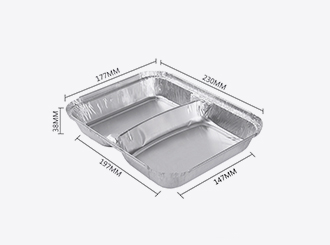
A 2 compartment aluminium foil container offers a simple way to separate two food items in one tray. Food service businesses can use one section for a main dish and the other for rice, vegetables, or side dishes.
With an 810 ml capacity, this model suits individual meals, takeaway orders, and prepared food portions. Its compact design also helps distributors serve customers who need practical packaging for everyday food service.
Product Specifications
| Specification | Details | Pictures |
|---|---|---|
| Product Name | 2 Compartment Aluminium Foil Container | 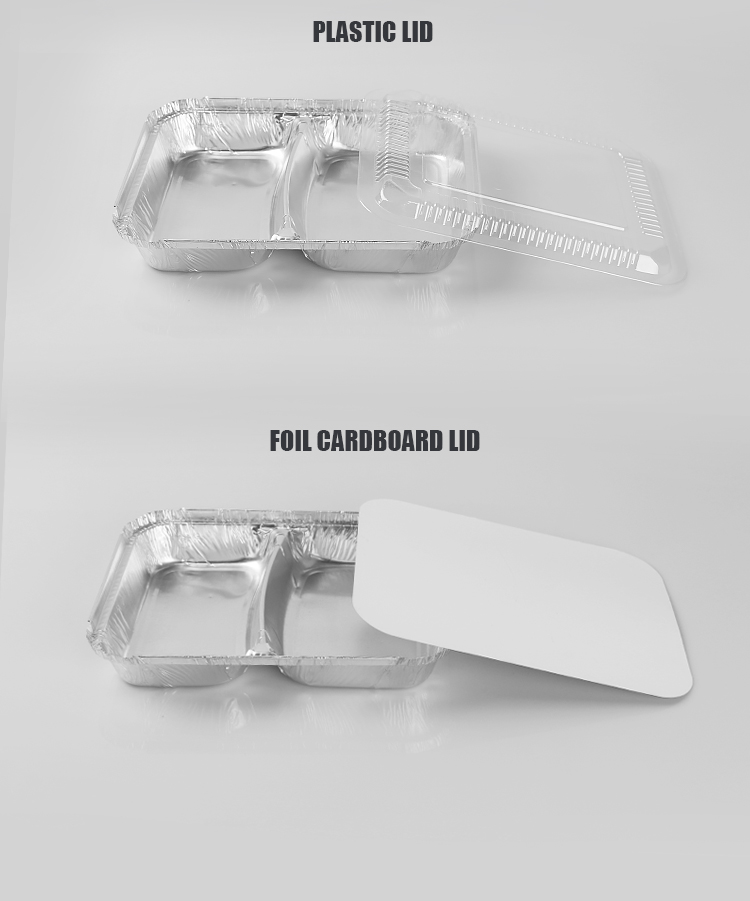 |
| Dimensions | 230 × 177 × 40 mm | |
| Capacity | 810 ml | |
| Unit Weight | 12.3 g | |
| Packing | 125 pcs/bag * 4 bags = 500 pcs/ctn | |
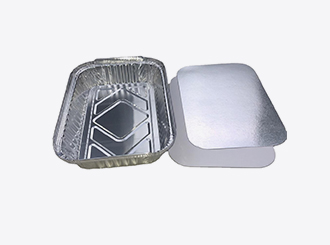
| Lid Options | Paper Lid & Plastic Lid | |
| Carton Volume | 0.0603 m³ |
For wholesale buyers, the carton volume of 0.0603 m³ provides a useful reference when estimating storage requirements and shipment quantities. Buyers should also confirm lid compatibility and carton packing details before placing bulk orders.
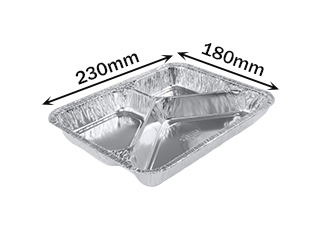
3 compartment foil containers provide an additional section for meals that require more separation. For example, catering businesses can pack a main dish, a vegetable side, and a separate portion of rice in one container.
This configuration works well for takeaway meals, lunch boxes, catering services, and prepared meal suppliers. With a capacity of 780 ml, the container offers a compact option for portion-controlled meals.
Product Specifications
| Specification | Details | Pictures |
|---|---|---|
| Product Name | 3 Compartment Foil Containers | 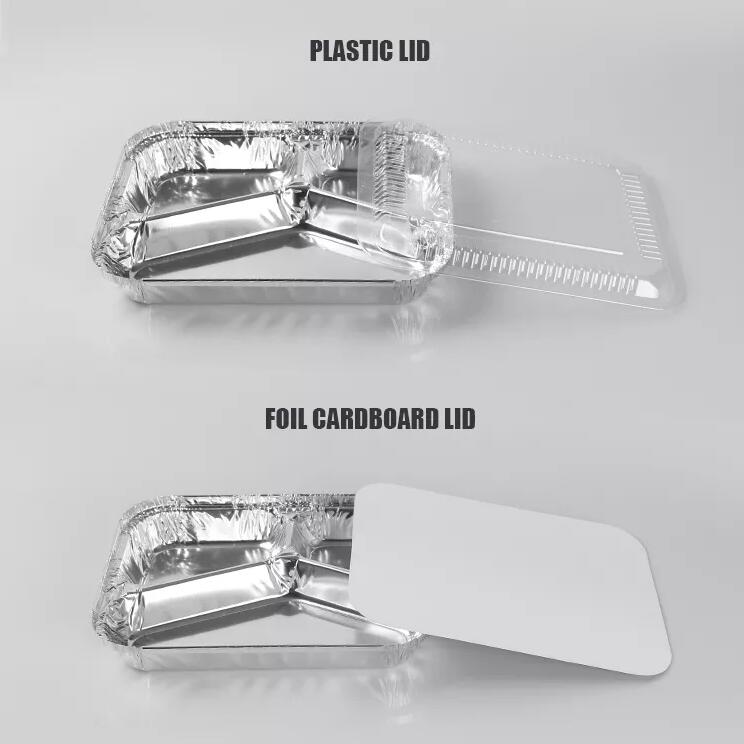 |
| Dimensions | 230 × 180 × 40 mm | |
| Capacity | 780 ml | |
| Unit Weight | 13 g | |
| Packing | 125 pcs/bag * 4 bags = 500 pcs/ctn | |
| Lid Options | Paper Lid & Plastic Lid | |
| Carton Volume | 0.0646 m³ |
Compared with the 2 compartment model, this tray has a slightly different size, a lower stated capacity, and a higher unit weight. These differences matter when buyers compare portion sizes, packaging costs, and logistics requirements.
Therefore, importers and distributors should evaluate the actual compartment layout and usable capacity rather than choosing a tray based on its external dimensions alone.
4 divided aluminum foil trays suit meals that contain several components. Their four-section design helps food service operators organize different ingredients and present complete meals in a single package.
Restaurants, institutional caterers, meal preparation companies, and ready-meal suppliers may choose this configuration when they need to separate several side dishes or ingredients. The tray has an 800 ml capacity and shares similar external dimensions with the 3 compartment model.
Product Specifications
| Specification | Details |
|---|---|
| Product Name | 4 Divided Aluminum Foil Trays |
| Dimensions | 230 × 180 × 40 mm |
| Capacity | 800 ml |
| Unit Weight | 13 g |
| Packing | 125 pcs/bag * 4 bags = 500 pcs/ctn |
| Lid Options | Paper Lid & Plastic Lid |
| Carton Volume | 0.0672 m³ |
Although the 3 compartment and 4 compartment trays share the same external dimensions and unit weight, their stated capacities differ. Buyers should also consider the size of each section to ensure that the tray accommodates their customers' typical meal portions.
For distributors serving multiple food service segments, offering several compartment configurations can help meet a broader range of packaging needs.
Foil compartment trays serve a variety of commercial food packaging applications. Their divided structure helps businesses organize meals while keeping individual food items separate during packing and serving.
However, buyers should match each tray to the intended food, portion size, and handling requirements. They should also verify the container's temperature suitability and any applicable food-contact requirements before selecting a product for commercial use.
Choosing the right lid is an important part of purchasing foil compartment trays. Both paper lids and plastic lids are available for the three models described above, subject to product compatibility.
Paper lids can provide a suitable option for businesses that prefer a paper-based packaging component or want more flexibility for printed branding. Buyers should confirm the lid's grease resistance, moisture resistance, and suitability for the intended application.
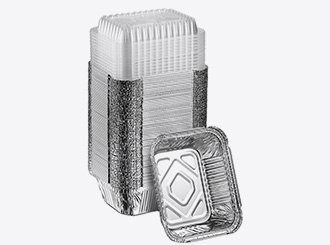
Plastic lids offer a lightweight covering option and allow customers to view the food when the lid uses a transparent material. Depending on the lid design, they can support convenient packing and presentation. Buyers should verify the fit and closure performance before placing a large order.
Neither option automatically guarantees a leakproof seal or suitability for every temperature. Therefore, importers should check the material specifications, lid fit, and intended use with their supplier. They should also consider local packaging regulations and customer preferences when selecting a lid.
When purchasing foil compartment trays in bulk, importers and distributors should evaluate more than the unit price. Packing quantities, carton dimensions, product weight, and lid configurations all affect the total cost of procurement.
Each model listed in this guide contains 500 pieces per carton. However, the carton volumes vary:
These figures help buyers estimate warehouse space and shipping volume. For example, the 4 compartment model occupies more carton volume per carton than the other two models, so buyers should account for this difference when planning mixed-model shipments.
Before confirming an order, request a detailed quotation covering unit prices, carton specifications, lid options, minimum order quantities, lead times, and shipping terms. Buyers should also confirm whether the quoted price includes lids or covers the trays only.
Finally, verify the actual loading plan with the supplier or freight forwarder. Container capacity depends on carton dimensions, loading arrangements, payload limits, and the selected shipping container.
The right foil compartment tray depends on your customers' food packaging requirements and your distribution strategy.
Choose a 2 compartment aluminium foil container when customers need to separate two food items. Consider 3 compartment foil containers for meals with three distinct components. Select 4 divided aluminum foil trays when customers need additional separation for multi-component meals.
For importers, wholesalers, and distributors, comparing these configurations allows you to build a product range for different food service applications. Before purchasing, check the capacity, unit weight, carton volume, lid compatibility, and required order quantity.
Working with an experienced aluminum foil container manufacturer can also help you confirm specifications, evaluate packaging options, and plan bulk orders more efficiently. By matching the right tray configuration with your target market, you can offer practical food packaging solutions while managing inventory and logistics costs.