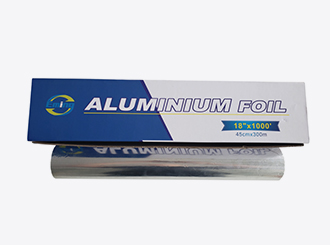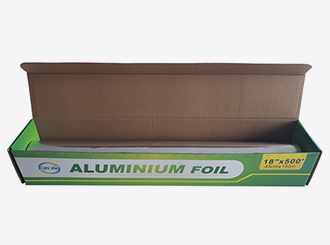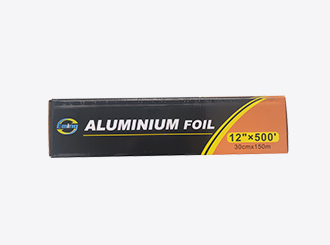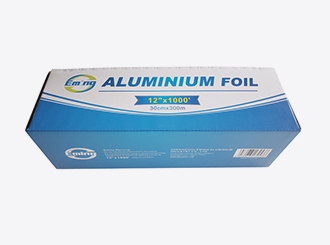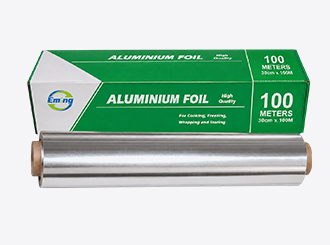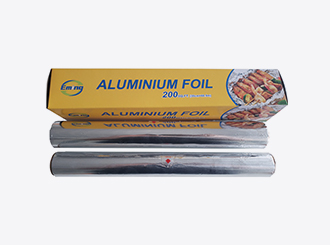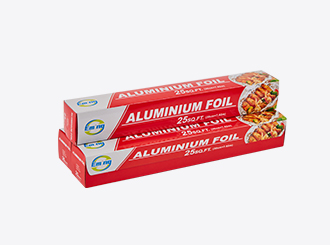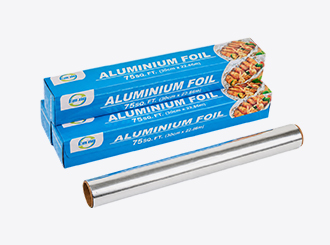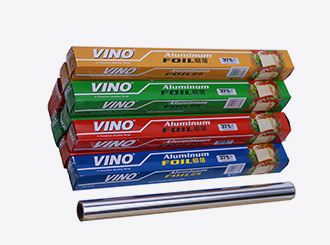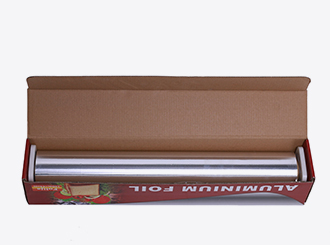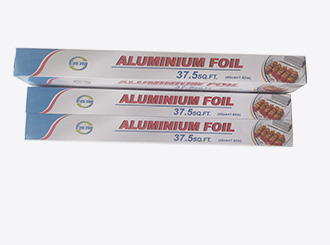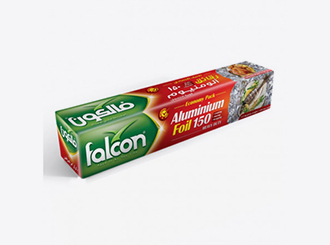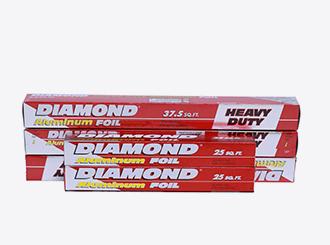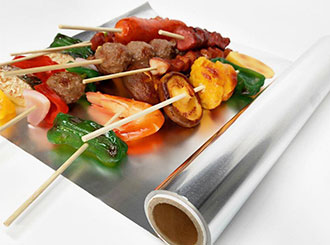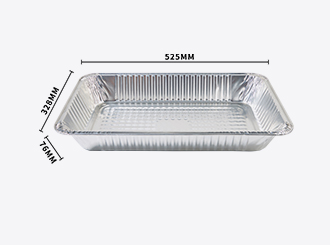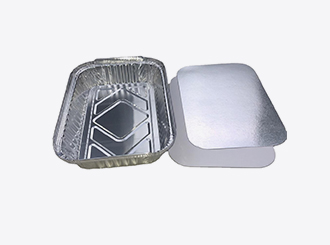
When sourcing aluminum foil for your business, you may come across two common product categories: foodservice foil and household foil.
Both products are made from aluminum foil, but they are designed for different users, applications, sales channels, packaging formats, and purchasing requirements.
Household foil is mainly intended for home cooking, baking, food storage, grilling, and everyday kitchen use. Foodservice foil is designed for restaurants, catering companies, hotels, bakeries, commercial kitchens, and foodservice distributors that use aluminum foil in larger quantities.
So, what is the difference between foodservice foil vs household foil? Is foodservice foil always thicker? Which type should you import for your market?
This guide explains the key differences between foodservice and household aluminum foil and provides practical information for importers, wholesalers, distributors, and private-label buyers.
Foodservice foil is aluminum foil designed for commercial food preparation, cooking, baking, wrapping, covering, and catering applications.
Unlike typical household foil, foodservice foil is often supplied in longer rolls and commercial packaging because restaurants and other food businesses use aluminum foil frequently throughout the day.
Typical foodservice foil buyers include:
For these buyers, the purchasing decision is usually based on more than retail appearance. They may consider roll length, foil thickness, width, strength, packaging efficiency, cost per meter, cutter design, quality consistency, and supply stability.
For example, a restaurant that uses aluminum foil every day may prefer a longer roll because it reduces the frequency of roll replacement during food preparation.
Household foil, also called kitchen foil in some markets, is primarily designed for consumers and everyday household applications.
Common household aluminum foil applications include:
Household foil is commonly sold through supermarkets, grocery stores, retail chains, e-commerce platforms, and other consumer channels.
Because household foil is sold directly to consumers, packaging is particularly important. Retail buyers may require printed color boxes, brand logos, barcodes, consumer-friendly instructions, and convenient cutters.
For private-label buyers, the box design, logo, product information, and master carton can also be customized according to the target market.
The main difference between foodservice foil and household foil is not the aluminum material itself. Both are aluminum foil products.
The main differences are related to their target users, applications, roll formats, packaging, sales channels, and purchasing priorities.
| Feature | Foodservice Foil | Household Foil |
|---|---|---|
| Target users | Restaurants, caterers, hotels, bakeries, commercial kitchens | Household consumers |
| Main applications | Commercial cooking, catering, baking, food preparation, wrapping | Cooking, baking, grilling, food storage |
| Roll length | Often supplied in longer commercial rolls | Usually supplied in consumer-friendly lengths |
| Common widths | 29, 30, 44, 45, 60 cm and custom sizes | Commonly 29, 30, 44, 45 cm |
| Thickness | Depends on the application | Depends on the market and application |
| Packaging | Commercial, bulk, or customized packaging | Retail-ready packaging |
| Cutter | Plastic or metal cutter depending on requirements | Commonly designed for retail use |
| Purchasing focus | Cost per meter, durability, efficiency, consistency | Convenience, appearance, retail price, branding |
| Sales channels | Foodservice distributors and wholesalers | Supermarkets, retailers, and e-commerce |
| Customization | OEM, private label, custom specifications | OEM, private label, custom retail packaging |
This distinction is particularly important for importers and distributors. The right product configuration should match the needs of your target customers rather than simply being selected based on thickness.
Not necessarily.
One common misconception is that foodservice foil is always thicker than household foil. In reality, foil thickness depends on the intended application.
A restaurant may need standard-duty foil for general food wrapping and food preparation, while a catering company may require a heavier specification for roasting, grilling, or other demanding applications.
Household foil can also be manufactured in different thicknesses depending on the market and application.
Therefore, it is more accurate to understand these terms in the following way:
Foodservice foil describes the target market and commercial application.
Heavy-duty foil describes a product specification associated with greater strength and heavier-duty applications.
These two terms can overlap. For example, a manufacturer may supply:
Heavy Duty Foodservice Aluminum Foil
This means the product is designed for commercial foodservice customers and also has a heavier-duty specification.
Therefore, buyers should not assume that every foodservice foil product must be thicker than every household foil product.
Roll length is another important difference for B2B buyers.
Household foil is often supplied in consumer-friendly lengths such as:
The actual roll length varies according to the target market, retail positioning, thickness, and packaging requirements.
Foodservice foil can be supplied in longer rolls because commercial customers normally consume more aluminum foil.
Typical commercial roll lengths may include:
For restaurants and catering companies, longer rolls can reduce the number of roll changes required during daily operations.
For distributors, different roll lengths can also be used to create different product ranges for restaurants, catering suppliers, wholesalers, and other commercial customers.
Foodservice aluminum foil is available in different widths to accommodate various commercial applications.
Common widths include:
Custom widths can also be discussed depending on the manufacturer's production capabilities and order requirements.
For example, 30 cm foil is suitable for many general food preparation and wrapping applications, while 45 cm and wider foil can provide additional coverage for larger trays, catering operations, and commercial kitchens.
When importing foodservice foil, buyers should consider width, thickness, and roll length together instead of evaluating thickness alone.
Packaging is one of the most visible differences between foodservice foil and household foil.
Household foil is normally designed for retail shelves and direct consumer sales.
Common packaging options include:
The packaging needs to provide clear product information and fit the visual requirements of the retail market.
For private-label buyers, manufacturers can customize the box design, logo, product information, barcode, and master carton according to the buyer's requirements.
Foodservice foil is generally more focused on commercial efficiency.
Common options include:
Foodservice distributors may prefer simple and durable packaging that protects the aluminum foil during transportation, warehousing, and daily use.
The objective is different from retail packaging. Instead of focusing primarily on shelf appeal, commercial packaging also considers durability, handling efficiency, product protection, storage, and cost control.
The purchasing decision also changes according to the target customer.
A household consumer may ask:
Is this aluminum foil easy to use?
A supermarket buyer may ask:
Does the packaging look attractive on the shelf?
A foodservice distributor may ask:
What is the cost per meter?
A restaurant supplier may ask:
Can you provide consistent thickness, length, width, and packaging?
This is why B2B buyers should not evaluate foodservice foil using exactly the same criteria as household foil.
You may also see the term catering foil when sourcing aluminum foil.
In many markets, catering foil and foodservice foil refer to closely related commercial products. Both are commonly used by restaurants, caterers, hotels, bakeries, and commercial kitchens.
However, terminology can vary between countries and sales channels.
Foodservice foil is a broad term that describes aluminum foil supplied to the foodservice industry, while catering foil is commonly used in some markets to describe foil intended for catering and commercial food preparation.
For this reason, B2B buyers searching for suppliers should consider both foodservice foil and catering foil when researching manufacturers.
Another important distinction is between foodservice foil and heavy-duty foil.
These terms describe different aspects of an aluminum foil product.
Foodservice foil mainly describes the target market and commercial application.
Heavy-duty foil describes a product's specification and performance, particularly when higher strength or a heavier gauge is required.
As a result, the two terms can overlap.
For example, both of the following can be foodservice products:
The appropriate specification depends on what the end user needs to wrap, cover, cook, bake, grill, or package.
The right choice depends primarily on your customer base and distribution channel.
For these customers, retail-ready packaging, consumer-friendly roll sizes, branding, and ease of use are important considerations.
For these customers, longer rolls, commercial packaging, consistent quality, durability, and competitive cost per meter are often more important.
If your business supplies both retail and foodservice customers, it may be more effective to develop separate product lines instead of using one specification for every customer segment.
When requesting a quotation from an aluminum foil manufacturer, it is better to provide complete product specifications.
Specify the required width, such as 30 cm, 45 cm, or 60 cm.
Specify the required thickness, such as 10 micron, 12 micron, 15 micron, or 18 micron, depending on the application and market requirements.
Specify the required length, such as 75 m, 100 m, 150 m, or 300 m.
If your market has a specific paper core requirement, include the required core diameter when requesting a quotation.
Specify whether you need a color box, plain box, plastic bag, master carton, or customized packaging.
You can request a plastic cutter or metal cutter depending on your product positioning and target customers.
For private-label products, provide your logo, packaging artwork, product information, and any required barcode or market-specific labeling.
MOQ can depend on the foil specification, packaging design, printing requirements, and order quantity. Confirm the MOQ with the manufacturer before finalizing your product specifications.
For importers and distributors, foodservice foil does not necessarily need to be a standard off-the-shelf product.
An experienced aluminum foil manufacturer can customize the product according to your market, customer requirements, and distribution channel.
Possible OEM options include:
This flexibility allows distributors to develop a foodservice foil range specifically for restaurants, catering businesses, commercial kitchens, and other professional users in their market.
Price is important when sourcing foodservice aluminum foil, but it should not be the only consideration.
B2B buyers should also evaluate the following factors.
A manufacturer should have sufficient production capacity to support repeat orders, seasonal demand, and your expected growth.
Consistent thickness, width, length, roll quality, and packaging are important for commercial customers.
The supplier should be able to provide packaging that matches your sales channel, whether you need commercial packaging, retail packaging, or private-label products.
If you sell aluminum foil under your own brand, confirm that the manufacturer can handle customized packaging, printing, product specifications, and carton requirements.
An experienced export supplier should understand international packaging, container loading, export documentation, and shipping requirements.
Ask about raw material control, production inspection, finished-product inspection, roll length control, packaging inspection, and other quality-control procedures before placing a large order.
For importers looking for foodservice aluminum foil, working directly with an experienced manufacturer can provide greater flexibility in product specifications, packaging, and private-label development.
Eming Aluminum Industry manufactures aluminum foil products for international B2B customers, including household aluminum foil and foodservice/catering foil.
With a production facility covering more than 16,000 m² and more than 50 production lines, Eming supplies aluminum foil products to customers across Europe, Latin America, Africa, the Middle East, Asia, and Oceania.
For foodservice foil, buyers can discuss specifications such as:
The final specification can be developed according to your market, application, packaging requirements, and order quantity.
Foodservice foil and household foil are both aluminum foil products, but they serve different markets.
Household foil is mainly designed for consumers and retail channels. Convenience, retail packaging, roll size, branding, and consumer price are important considerations.
Foodservice foil is designed for restaurants, catering companies, hotels, bakeries, commercial kitchens, and foodservice distributors. Longer rolls, commercial packaging, consistent quality, durability, and cost per meter are often more important.
The key point is that foodservice foil is not simply thicker household foil. The two product categories are differentiated primarily by their target users, applications, specifications, packaging, sales channels, and purchasing requirements.
If you are an importer, wholesaler, distributor, or private-label buyer, start by identifying your customers and their applications. Then select the appropriate width, thickness, roll length, packaging, and cutter configuration.
Choosing the right foodservice foil specification can help you offer a product that fits your customers' daily operations while maintaining a competitive cost structure.